
We can afford the necessary societal investments
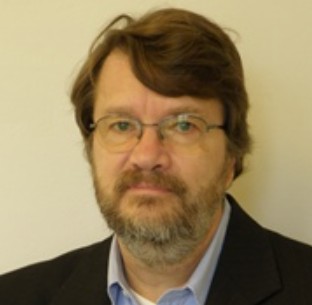
A shrinking workforce and the need for large-scale societal investments are the major challenges facing the Danish economy in the coming decades. Professor Peter Birch Sørensen, together with colleagues in DREAM, examines models that can show how much we can invest without compromising economic responsibility.
If one associates the word “Dream” with daydreamers, then the group of economists in DREAM could hardly be farther from it. Their approach is factbased, grounded in hard economic data and demographic projections.
Behind the acronym DREAM stands the Danish Research Institute for Economic Analysis and Modelling. DREAM are economic toolmakers: this is where they develop and finetune the models and analytical tools that many other economists also rely on.
As part of CIP Foundation’s project on societal investments, part of the DREAM team is working with a model that can show how large investments the Danish economy can accommodate over the next 20–30 years.
For even though the Danish economy has been particularly strong in recent years, we face major challenges over the next centuries. In a wide range of areas, substantial investments are needed. At the same time, within only a few years, there will be far fewer people of working age. The smaller workforce will have to earn the money both for education and welfare services for children, young people, and the elderly, and for the many pressing investments.
Demographic hammock
Economists talk about hitting a demographic hammock in the period 2030–2050.
“We will have a workforce which, relative to the number of people outside the labour market who need support, will be significantly smaller than today. This will put pressure on public finances,” explains Professor Peter Birch Sørensen from the University of Copenhagen.
In addition to serving as a board member of DREAM, he is a former chair of the Danish Economic Council and was the first chair of the Danish Climate Council from 2014 to 2018.
The challenges from the demographic hammock are amplified by the need for investments.
“We have a large backlog in the maintenance of public infrastructure, this includes roads and railways, sewers and water supply. Large parts of the public building stock also need renovation and better maintenance,” says Peter Birch Sørensen, continuing:
“In parallel, we need investments in defence and security, and on top of that comes the entire green transition, where we must invest both in climate adaptation and in transforming the energy supply.”
In many areas, these will be profitable investments that will pay for themselves over time. Transport networks and digital infrastructure are crucial for business. The bill for storm surges and extreme rainfall will be even larger if we do not invest in climate adaptation. If we renovate buildings to improve energy efficiency, we save on energy costs in the long run.
Restraint is not the solution
When investing in the transformation of the energy sector, there are both economic and security policy gains.
“Many of the investments in the green transition are specifically aimed at creating a more resilient and robust energy system. It will free us from dependence on fossil fuels, which is unsustainable both geopolitically and climatically,” notes Peter Birch Sørensen.
So even though public finances will be under pressure during the hammock years, excessive restraint may be problematic. On the contrary, there is a need to push up to the limit of what is economically responsible. That is the core of the analysis DREAM is working on for CIP Foundation.
“The aim is to assess how much we can reasonably increase investments in Denmark without undermining economic stability and the long term sustainability of public finances. We use our models to determine where the limits lie,” says Peter Birch Sørensen.
Maintaining budget discipline
With the 2012 Budget Law, strict limits were set on state borrowing. This is meant to ensure economic discipline and prevent the overspending that has previously been costly to correct. But the restrictions of the Budget Law make it difficult to make room for the necessary investments.
“In our investment scenario, we exceed the limits of the Budget Law for a defined period, but we also introduce an alternative constraint: the public sector must not borrow more in any given year than what is invested net in building new capital stock and new infrastructure. In that way, we ensure that the debt the public sector incurs is matched by the fact that we will have a larger production capacity and better infrastructure in the future. This ensures that we do not burden future generations,” says Peter Birch Sørensen.
In addition to identifying the responsible upper limit for investments, the project also examines how to secure a balance between public and private investments.
It is far from given that the public sector must undertake all necessary investments. The energy sector is an example: private and semi-public actors are already undertaking a significant share of investments on market terms.
Peter Birch Sørensen points out that there may be a need to explore new models for public private cooperation. And perhaps draw inspiration from existing experience:
“To attract more private investments, it may be necessary to provide state loan guarantees when private actors invest in societally important areas with high risk. It may also be necessary to offer subsidies. This is already done within the green transition for various new technologies that are not yet mature enough to attract capital on market terms,” he says.
Great potential in the strong Danish economy
Seen from this perspective, there is large, untapped potential in the Danish economy, the professor notes.
We invest a significant part of our national savings abroad instead of investing them at home.
“Apart from some of the oil states, Denmark stands out. We have a huge surplus on the balance of payments, larger than almost any other country, and we channel a large share of our savings into foreign investments. It would be beneficial if we could direct some of those large savings toward sensible investments here in Denmark,” says Peter Birch Sørensen.
In the models, the question is not only about finding the fiscal room for investments. The models also reveal whether there is a risk of overheating the economy, where labour shortages lead to rising wage pressure and inflation.
Here, the Danish economy is stronger than in the past, says Peter Birch Sørensen. Denmark has become better at attracting foreign labour and integrating immigrants and their descendants into the labour market.
However, he stresses that in the very short term, it would be problematic to increase investments significantly.
“With the current business cycle, there is no room for substantial increases in investments. In the project, we calculate the effects of initiating a range of investments from 2030 onwards, when we expect the labour market to have cooled somewhat,” he says.
Plans must be adjusted
With the caution typical of many researchers, Peter Birch Sørensen does not claim that DREAM’s models can predict economic developments decades ahead in detail. From pandemics to financial crises, many events can shift the scenarios, he emphasises.
“You also have AI, where some expect huge productivity gains. That is just one of several uncertainties. That’s why it is crucial that the models include sensitivity analyses where we assess the impact from abroad,” he explains.
But uncertainty can never be an argument against working with models and long-term planning, he stresses.
“When the world changes, you must adjust your plans. That is why it is useful to have a long-term plan, where you gradually initiate projects. Later, you can assess whether the approach still holds and whether we have the funds to launch more major investments. If an economic downturn occurs, it may actually be beneficial to have prepared projects ready to initiate to support the economy,” says Peter Birch Sørensen.