
If Europe does not stick together, we will end up as pawns in the chess game of the great powers
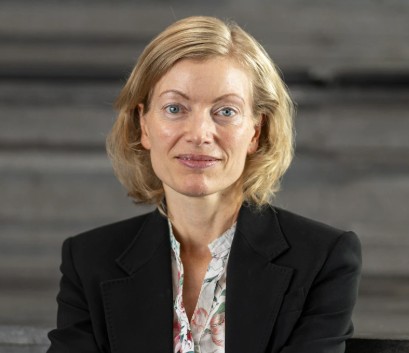
Europe is squeezed between great powers that do not feel bound by international rules and agreements. Therefore, there is a need for rearmament, says Anja Dalgaard-Nielsen, who also praises the EU’s goal of energy independence. Today, climate and security policy are closely linked, she points out.
The willingness of European NATO countries to increase defence budgets and the EU’s focus on strengthening strategic resilience and autonomy in the field of energy. Both have been a long time coming. That is precisely why these are two key events when the story of 2025 is to be written. This is the opinion of Anja Dalgaard-Nielsen, vice-dean and professor at Copenhagen Business School, where she heads the research initiative “Geopolitics and Business Security”.
“At this summer’s NATO summit, the European NATO countries stepped up and agreed to raise defence spending to five percent of GDP. This happened at a time when there could have been a break in the defence alliance. With the decision, the European countries have shown their willingness to rearm themselves that in the long term can ensure that they match Russia. Also, without support from the United States,” she says.
The EU’s energy policy is just as central to security policy. After the energy crises of the 70s, we in Europe cleverly forgot that energy supply is a crucial corner of security and trade policy. In large parts of Europe, not least Germany, the cheap Russian gas came to play a greater role. Admittedly, the alarm bells rang with Russia’s annexation of Crimea in 2014, but it was only with the invasion of Ukraine that we were brutally shaken awake from our Sleeping Beauty slumber. And now, only after several more years of buildup, is the EU ready to drop Russian gas.
“Now a clear line has been drawn. The goal of energy independence is absolutely central in the EU today. And with good reason, because energy is once again being used as a key geopolitical weapon. Climate and energy policy and security are closely intertwined. There are still major challenges, but fundamentally there is now, within the EU, an understanding that energy is crucial to Europe’s sovereignty,” says Anja Dalgaard-Nielsen.
Frightening for a small state
With a background as a Master of Science in Economics and a Ph.D. from the prestigious Johns Hopkins University in the United States, she has been a key expert of Danish security policy for the past 25 years, as reflected in her positions at the Danish Institute for International Studies and in both the Danish Police and Defence Intelligence Service.
In many ways, it is a gloomy picture that Anja Dalgaard-Nielsen paints. Today’s world can resemble a situation, where you have played football for years and everyone has politely followed the rules, and then suddenly the opposing players start acting as if it were rugby or American football. Without the referee blowing the whistle.
“We have gone from a world with a significant degree of regularity to much greater uncertainty and a logic of jungle law. Here, Russia’s attack on Ukraine is the clearest example. This goes against the basic understanding that you cannot move borders with military force. It is brutal and frightening for a small state like Denmark,” she says.
Transatlantic uncertainty
With the line laid down by the current US administration, the dark clouds drew even more. Repeatedly, NATO’s mutual-defence pledge, that is, the principle that an attack on one country is an attack on the entire alliance, has been questioned. The Trump administration has threatened the annexation of Greenland, and the United States’ line towards Ukraine and Russia repeatedly questions the United States’ loyalty to the transatlantic partnership, which has been a cornerstone of both Danish and European security policy since the end of World War II in 1945.
In many ways, international politics has become trade policy. But where previously a fine-meshed web of trade agreements and rules of the game had been built up both bilaterally and in organizations such as the WTO, the UN and the OECD, today there is a much more open game where military strength, access to raw materials and political influence are put into play. Here, too, the rule-based world order is under pressure.
Hope did not hold
“Economic relations are also moving, to a large extent, towards a situation where the great powers simply do as they please. They are far less likely to follow the rules that have been painstakingly built up over several decades. This too is worrying for a small state like Denmark, which has an open, export-based economy,” says Anja Dalgaard-Nielsen.
The major challenges we are facing are traceable to before the fall of the Berlin Wall and the collapse of the Soviet Union.
In Germany, the motto “Wandel durch Handel” (“change through trade”) was already in use in the 1970s. By trading with the communist countries of Eastern Europe, they would push them toward change. This approach was further fuelled after the end of the Cold War. Most significantly, the thoughts were expressed in Francis Fukuyama’s book “The End of History and the Last Man.” The liberal Western democracies had triumphed, and democratic forms of government and an open market economy would prevail, he said.
“It is this mindset that drove foreign and trade policy after the end of the Cold War. And while the idea of creating peace and prosperity through economic cooperation has been a success when we look at the Western European countries, things simply did not turn out that way in relation to Russia,” says Anja Dalgaard-Nielsen.
Here, energy policy is key to understanding the situation. The wealthy Western European countries have a high degree of political stability, a well-educated workforce, and strong companies. But we lack energy, and that is a glaring Achilles’ heel in terms of security policy. There are no easy solutions.
From one addiction to a new
When Russia retaliated against the EU’s sanctions after the attack on Ukraine by cutting gas supplies, it triggered the biggest energy crisis in Europe since the energy crises of the 1970s.
Over the past four years, the EU has largely freed itself from Russian gas. But there is a long way to go before energy independence. The gas that previously came in pipelines from Russia has been replaced by liquefied natural gas (LNG), which can be transported on tankers. And here, the United States accounts for about half of European imports.
“In this way, we are left with new addictions. With a US where the ‘America First’ approach dominates, the US has already shown that it will also use energy resources as strategic tools to promote its own interests,” says Anja Dalgaard-Nielsen.
In this way, the green transition is not just about climate policy. It has become the crucial foundation for securing Europe’s independence, although there are stones on the road here too. Not least because China today dominates the extraction and production of the minerals and rare earths that are essential for a wide range of green technologies.
“We must be careful not to replace dependence on Russian gas with a dependence on Chinese raw materials and technology. The green transition is a crucial tool in security policy. But at the same time, we must ensure that we have greater control over the green technologies,” says Anja Dalgaard-Nielsen.
More recycling and new partnerships
She refers to the research conducted by her CBS colleague Dr. Philipp Alexander Ostrowitz from the Copenhagen School of Energy Infrastructure. A European green transition will require much stronger cooperation in the energy area, he says.
Wind, solar, hydropower, the existing nuclear power, hydropower and PtX support and complement each other. However, there is a need to think across borders, and there is a need to expand and ensure a much stronger integration of the European electricity grids and invest in energy storage.
“We must make the green transition European. This means that we must have a much greater focus on both extraction and refining, and on the recycling of the critical raw materials. At the same time, we must develop partnerships with countries in Asia, Africa and South America, so that our supply chains do not rest on individual countries,” says Anja Dalgaard-Nielsen.
She emphasizes that energy independence can in no way replace the need for European rearmament. In the recent threat assessment from her former workplace, the Danish Defence Intelligence Service, the assessment is that if the war in Ukraine stops, Russia could be ready for a new local war within six months to a year. In 2028, Russia will be ready for a regional war, and in 2031 for a large-scale war.
“I completely agree with that analysis. I do not want to speculate on Russia’s intentions, but the assessment of their capacity-building is, in my view, quite accurate. It is in this light that the NATO countries’ willingness to rearm must be seen,” says Anja Dalgaard-Nielsen.
Need for unity
In a position squeezed between the great powers, the only effective European response – both economically and militarily – is unity.
“That is clearly the crucial point, and historically the EU has lacked decisiveness. However, both relations with Russia and the Draghi report, which pointed to Europe’s ailing competitiveness, have set a new agenda. One example is Germany, which has relaxed its restrictive debt ceiling in order to rearm,” says Anja Dalgaard-Nielsen.
Right-wing populism is a wild card
A wild card that could be of crucial importance is the right-wing populist parties, which are gaining ground in several European countries, nearly all of which have a strongly EU-critical profile.
“If the EU fails to stand united, others will end up making decisions about our future over our heads. Right now, the EU is the key actor holding on to a world that is regulated by agreements and rules. There is already a lot of pressure from the outside. In 2026, there are several crucial elections, including state elections in Germany and regional elections in France, which could create pressure from within that could weaken the EU. It could be fatal,” says Anja Dalgaard-Nielsen.
She adds a reflection that most of all sounds like an appeal:
“A number of the EU-critical parties actually attach great importance to defending European culture. In my opinion, there is a close connection between the green transition and Europe’s strategic freedom, and thus the entire heritage of ideas and culture that permeates European countries. This can only be defended through strong unity in Europe,” she says.
Note: The interview was conducted before the turn of the year and therefore before the U.S. action in Venezuela and the renewed debate on Greenland.