
Major public investments are lining up – this calls for prioritization
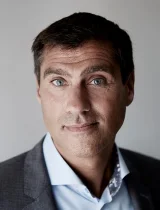
A new project from the CIP Foundation, led by Professor Philipp Schröder as head of the advisory board, aims to explore models that can attract private capital to major public investments.
The current geopolitical challenges have acted as a revealing agent, revealing other significant societal issues that we, as a society, have ignored for years.
That point comes from Philipp Schröder, Professor of Economics at Aarhus University.
The need for public investments is massive. In a world that has changed dramatically in just a few years, the necessity to strengthen Denmark’s and Europe’s defense and ensure access to both energy and critical raw materials is crystal clear. At the same time, there is a need for substantial investments in the green transition, climate adaptation, education, research, and digitalization. On top of that, public infrastructure, roads, buildings, utility networks, and sewage systems, is thoroughly worn down and will also require capital.
A common denominator is that these are areas the market does not solve on its own. Therefore, prioritization and an overarching investment plan from a societal perspective are needed.
This is the background for a new project at the CIP Foundation titled “Investment Plan 2050 for Denmark.” Philipp Schröder chairs the advisory board for the project, which carries the subtitle “Models for Public-Private Partnerships in Financing Key Public Investments.”
“The project has two pillars. We will look at how to create models that provide a better foundation for prioritization. At the same time, we will explore how to strengthen public-private partnerships for financing. If we can create the right framework so that pension funds and other investors can contribute to financing major public investments, it will help meet the capital needs, but of course, it requires appropriate returns and risk profiles,” he says.
The ice can quickly become thin
In a conversation with Philipp Schröder, it quickly becomes clear that he has chosen the right career path with his role as a researcher. You won’t hear any quick political buzzwords or slick sales-like solutions from the Aarhus professor.
He effortlessly connects economic theories with pedagogical and practical examples that illustrate the issues, while remaining extremely cautious about drawing conclusions based on weak foundations.
“This project is set to run over two years. These are very complex issues that cannot be solved in two years. When you’re assessing the effects of everything from education to infrastructure, the ice can quickly become thin if you’re not working very seriously,” he says.
He sees societal prioritization as a necessity. Fundamentally, market mechanisms work well for short-term investments. But the market is reluctant when it comes to major societal investments with long time horizons and high risks, and areas like defense and security are very difficult to value.
“That’s why we need to look at how we as a society can rank and prioritize a number of worthy investment purposes. Here, it’s about uncovering the societal return,” he says.
That assessment is far from straightforward. One can easily argue that both roads and water supply are crucial for business development. Strong internet connections are central to digitalization, which boosts productivity. The same applies for education. Both businesses and public welfare systems need access to well-educated, qualified labor.
Conversely, a bridge that only a few people use is not a profitable investment, Philipp Schröder points out. He cautiously mentions, without naming specific locations, that there are probably motorways that wouldn’t exist if the decision had been made based on a more thorough economic calculation.
Be careful with support
When valuing public investments, it’s not just about whether they are used, but also what they are used for, Philipp Schröder points out with a down-to-earth example:
“If you invest in strong digital networks, it clearly has value if it contributes to productivity in businesses and the public sector. But if digitalization is primarily used for streaming Netflix, then the societal added value may not be particularly high,” he says.
He also highlights the economic concept of crowding out, which refers to the public sector paying actors for something they would have done anyway:
“If you start arguing that it’s a profitable public investment to sponsor driving licenses for all 17-year-olds so they can take jobs as delivery drivers, you overlook the simple fact that most young people would have gotten their licenses anyway,” he exemplifies.
Research and export credit work well
Philipp Schröder points to the management of public innovation and research funding as an area from which he would like to draw inspiration. Here, state prioritization and market forces are blended in a sensible way:
“There’s no micromanagement, but rather a mission-driven approach with a set of prioritized focus areas. It could be anything from cancer research to CO₂ storage. Instead of specifying exactly which technologies are desired, research funding is allocated based on what outcomes are sought. Then market forces are activated among universities, private sector research, and other actors,” he says.
Export credit is another area where the division of labor between public and private actors creates value. At the state-owned EIFO (formerly EKF – Export Credit Fund), private companies can hedge risks when exporting. There simply haven’t been enough private actors willing to take on the complex task of assessing the economies and political stability of distant countries. They tend to be overly cautious, Philipp Schröder notes.
As a contrasting example, he shares his own experiences with the telecom sector. During his studies, he moved from Germany to the UK in the 1990s. While the public telecom monopoly in Germany was extremely slow when transferring a landline number, the privatized British Telecom completed the process in just a few days. In telecom, the shift from monopolies to market competition led to efficiency and better service, an overall economic gain, Philipp Schröder emphasizes.
While competition and market exposure work well in sectors where companies can expect short-term returns, it’s much harder to attract private capital to long-term and uncertain investments.
The export credit example shows that risk mitigation is crucial if we want to create more attractive partnerships where private capital helps solve important societal challenges, Philipp Schröder points out:
“That’s one of the areas we need to look into. There will be cases where, if a public actor can help reduce and spread risk, it could attract private capital in a way that benefits the economy,” he says.
On the other hand, it’s essential to clearly identify and describe the market failure that public involvement is meant to address. If the state intervenes without a market failure to fix, the effort risks becoming a giveaway that distorts private investment flows, Philipp Schröder warns.
Passing the baton
As an economist, Philipp Schröder is acutely aware that economics is not the only factor at play in major public investments.
Whether it concerns healthcare, internet coverage, postal delivery, or road networks, there will always be political decisions involved, decisions we have collectively made as part of the social contract about what services citizens can expect, regardless of where they live or how old they are.
“That’s why decisions are made politically and not solely based on economic calculations. As economists, we can assess the effects on the economy to provide a objective picture of the impacts, but we pass the baton to the politicians, who must prioritize and make the decisions,” says Philipp Schröder.
He also points out that it’s a mistake to assume the public sector always operates with a rational and long-term investment perspective. While private actors are measured by returns to owners and investors, public decision-makers, politicians are also measured, at least every four years, when they face elections. Economists have studied this and refer to it as political business cycles.
This should be kept in mind when evaluating decisions, Philipp Schröder notes, choosing his words carefully:
“I don’t want to question the motives of political decision-makers. But it’s naive to believe that political priorities always hit the mark. In the worst case, they’re made with a four-year horizon. You can also find examples of unpleasant priorities that never materialize. Presumably, ideology is not the best investment advisor,” he says.
The Aarhus professor highlights healthcare systems as an example of how the design and interaction between public and private actors can vary widely, even in wealthy countries with major consequences for the societal cost of services and what we get for our money.
“From an international perspective, the Danish healthcare system is highly efficient and costs a significantly smaller share of GDP compared to what is spent on healthcare in very different countries like Germany and the USA. In the US, there’s a peculiar alliance between healthcare providers and the private insurance sector. This has resulted in extremely high spending with relatively modest and unevenly distributed health outcomes,” says Philipp Schröder.
With Philipp Schröder leading the new project, it seems unlikely that easy solutions will emerge in the categories of “much more state” or “much more market.” There is far too much detached researcher and far too little ideologue in the Aarhus professor.