Vestas CEO counters turbulence with pragmatism and facts
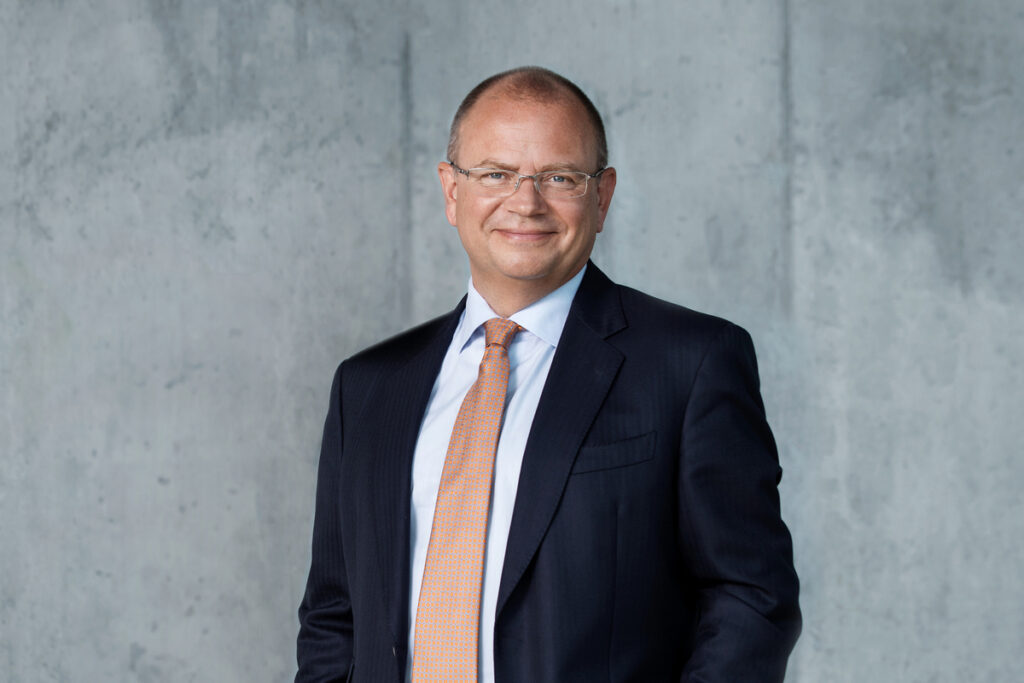
Free global trade makes us all richer, says Henrik Andersen, CEO of Vestas. Despite turbulence and headwinds, he takes a no-nonsense, fact-based and pragmatic approach.
Even though wind turbine manufacturer Vestas ranks at the very top when it comes to stock market darlings, CEO Henrik Andersen is not one of those business leaders who frequently appear in lifestyle magazines, TV shows or podcasts.
In many ways, he is the epitome of the Vestas mindset which despite several mergers and the relocation of its headquarters to Aarhus is still shaped by the company’s roots in western Jutland.
Rather than lapsing into quick statements made for catchy headlines, Henrik Andersen offers patient explanations when he speaks. He is not the type who deepens the gap in turbulent times. One of his core messages is that we must rely on facts rather than emotion-driven debates.
Even though the wind energy market has faced strong headwinds in the past few years, there is not a hint of whining from the Vestas CEO. To Henrik Andersen, it is essential that he and the company understand the market and the stakeholders and accept it as a condition.
‘Five years ago, it was all about the climate and about reducing CO2 emissions. Today, the world order has undergone significant changes. The world has become much more fragmented, and Europe is primarily focused on obtaining a greater degree of self-sufficiency and energy at reasonable prices. The expansion of wind energy remains one of the most sustainable solutions, but today security policy, self-sufficiency, competitiveness and sustainability are equally important,’ he says.
One of the debates that Henrik Andersen considers to be off track is when wind energy versus nuclear power turns into a clash between political wings. In his view, wind energy is not about ideology, it is about hard facts.
The EU could learn from the US
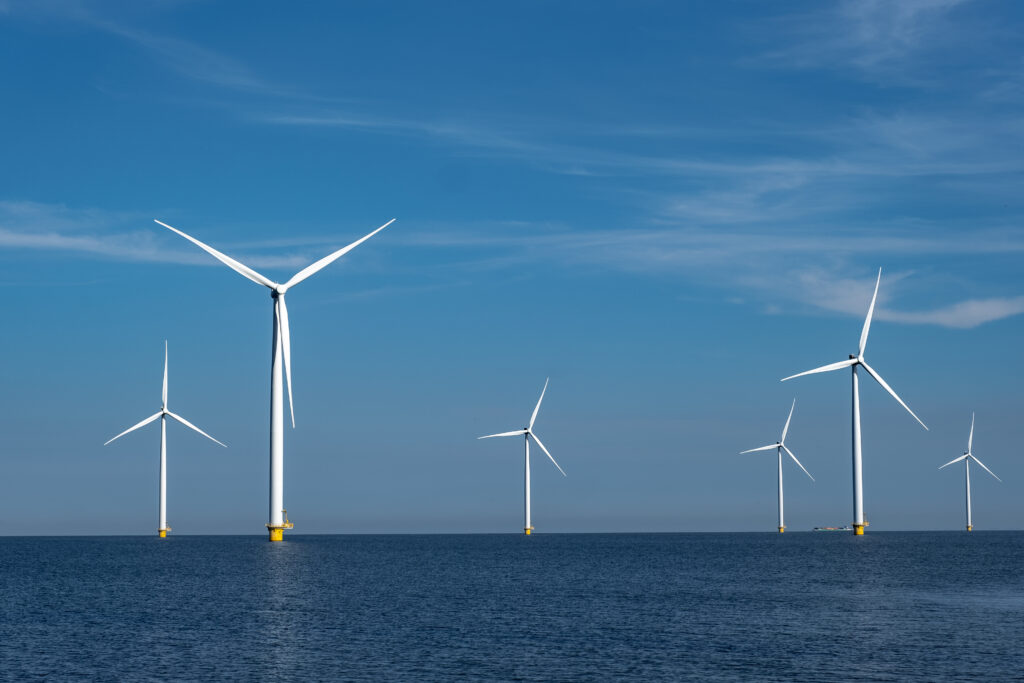
In a global perspective, there is also a need for calibration; not least of the view of the US, which by the way has been Vestas’ key market for the past 40 years. Together with GE Wind, Vestas holds a market-leading position in the US.
Irrespective of Donald Trump’s mantra of ‘drill, baby, drill’, Vestas still has considerable business activities in the US. While major offshore wind projects have been stalled, new onshore capacity is still being installed.
‘You should be very careful not to be overly categorical. I have met knowledgeable politicians from both sides of US politics who acknowledge that the expansion of wind energy will provide an extremely competitive energy supply,’ says Henrik Andersen.
The CEO points out that there are in fact areas where the EU could learn from the US.
‘Europe has come up with a multitude of ambitious plans, but that is framework legislation. In the US, legislation is followed up by guidelines after a few months with precise indications of how you can obtain approval of projects. This contributes to greater certainty for developers of wind farms and an entirely different speed of the transition to more safe, competitive and green energy,’ he says.
Henrik Andersen warns against overestimating the significance of the much talked about Inflation Reduction Act, IRA, one of most significant marks left by President Biden. Despite its name, the IRA has mostly helped support local production and the green transition. He emphasises an important detail:
‘There has been much focus on the IRA, but it should be borne in mind that the so-called Production Tax Credit, PTC, was introduced back in the 1990s. As much as 90% of the contents of the IRA is based on the PTC. What is a real advantage is that we now have a 10-year time frame whereas previously the scheme had to be renewed every second or third year. With a 10-year time frame, we do not have to scale up and down our activities as we used to do,’ he says.
The corporate culture remains intact
With 5,000 employees in the US, Vestas is one of the Danish companies that has felt the anti-woke agenda that is dominant in the US. Again, Henrik Andersen takes a pragmatic approach. The core values of Vestas will not be blown off course, he promises.
‘Vestas has activities in 86 countries, and we are used to navigate different cultures and religions and make efforts to capture the zeitgeist. When it comes to our employees, we obviously give priority to a team of mixed staff. Diversity in respect of age, gender and nationality creates value,’ says Henrik Andersen.
He adds:
‘Politicians and regimes come and go, but a corporate culture such as ours remains intact. To us, it is a matter of attracting talents irrespective of religion, race, etc.’.
The transition happens every day
The rich diversity of the Vestas workforce has helped catapult the company to the top of the Global 100 Most Sustainable Corporations list – an annual ranking by Canadian media and research company Corporate Knights. Unlike other rankings that merely uncover the perception of a target group, the one from Corporate Knights digs deep into the data.
But to Vestas, the aim is not just to deliver a product that fuels the green transition. The company is also focused on the entire value chain, Henrik Andersen emphasises.
‘We have renewed our vehicle fleet and are actively transitioning our service and maintenance departments,’ he explains.
The most extensive climate and environmental impact in the value chain comes from the steel used for the turbine towers. To remedy this issue, Vestas is working with several industry partners to develop greener steel solutions, Henrik Andersen says. It is the long, steady work that brings results, he emphasises.
‘Sometimes there are people who think that new technologies should be up and running by next week. But that is just not how things work. In this industry, the journey towards a lower CO2 footprint is something that happens every single day. We take small steps forward all the time. But we measure them, and we are making progress,’ he says.
In other areas, Vestas is making efforts to increase the reuse and recycling of turbine blades, and the company has also started testing towers made from wood instead of steel.
Isolation makes us poorer
When it comes to circularity, the wind turbine industry is in a completely different place today than it was 25 years ago – pretty much every single part of a Vestas wind turbine is traceable. Everything from the blades to the electronics can be reused or recycled in one way or another.
As CEO of Vestas, Henrik Andersen does not suffer sleepless nights over the much-talked-about shortage of rare earth elements and minerals.
‘We are in an industry where we reuse everything, and when we plan five to ten years ahead, I do not see any major issues. But our designs today are different from what they used to be, because we know that some elements and rare earths are not equally available in all regions,’ he says.
That approach is based on what the Vestas CEO calls a “commercially open world”. And with a remark that could also be a comment on the current global economy, he points to some classic principles from economics textbooks:
‘I grew up with the belief that everyone should focus on what they are best at and then trade with each other. That is what created the wealth we have today. If we isolate ourselves, we will all be worse off. If everyone tries to produce everything within their own national or regional value chains, we will all be poorer,’ says Henrik Andersen.
BOX
Blå Bog (the Danish Who’s Who) – Henrik Andersen
2019 – Vestas. CEO, formerly a member of the Board of Directors
2016-19 Hempel Group. CEO
2000-15 ISS. Various posts, including CFO and COO
1986-2000 Jyske Bank and SDS
Holds a Graduate Diploma in Finance (1992) and an MSc in Law from Aarhus University
Directorships in, among others, Lundbeck, Maj Invest and Vestas (until being appointed CEO). Chairman of Wind Europe with effect from March 2025.