
Climate adaptation to flooding – how is it organised and financed?
Project Description
The purpose of CIP Foundation’s project is to identify constructive pathways to enable more climate adaptation to be implemented.
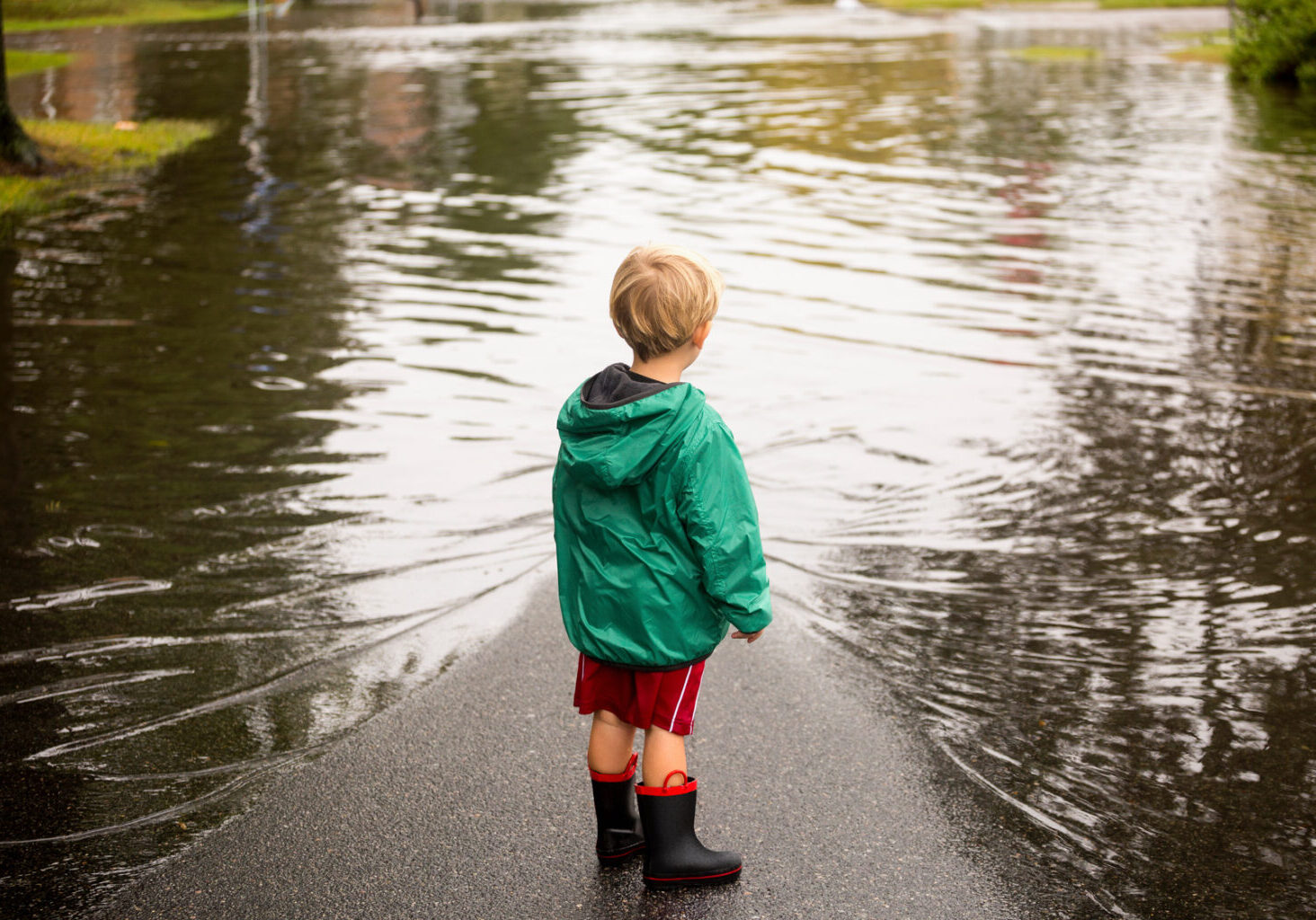
Climate change is resulting in more water – from above in the form of increased precipitation and more frequent and intense cloudbursts, from the side due to rising sea levels and storm surges, and from below in the form of high groundwater levels. This leads to a greater risk of flooding. It causes damage to buildings, infrastructure and natural areas, and affects economic activity, production capacity and mobility. It also, of course, impacts the people affected by flooding.
Different types of flooding are currently treated as independent events and are regulated in different ways. This also means there is varying coverage depending on the type of flooding. However, in reality, water exists in a connected cycle, and different events can influence and reinforce one another. Prolonged rainfall can raise groundwater levels, and already saturated soil makes it harder to absorb flooding from coastal areas or watercourses. There is therefore a need to consider water as a whole and to focus on preventive measures that address these interconnections.
A similar need exists in the potential organisation and financing of climate adaptation. There is currently no clear and consistent link between who finances climate adaptation measures and who benefits from them. There is therefore a need for a broader perspective on who benefits from the new infrastructure that climate adaptation represents, and on who can contribute to financing future climate adaptation.
With this project, CIP Foundation aims to estimate the consequences for Denmark of increased water across different types of flooding in order to illustrate the scale of the challenge. The expected losses and damages will be assessed in relation to the costs of prevention and other response options, in order to examine the nature of the societal investment we are facing, and to explore how potential solutions can be approached with different actors and a new approach to organisation, financing and cost sharing.
Vandkøbing
Climate adaptation in Denmark is currently characterised by siloed responsibilities, planning and financing. This makes it difficult to consider the natural water cycle as a whole and to develop integrated solutions when water comes from multiple sources and across municipal boundaries. A shared understanding among the many stakeholders involved is essential to achieving progress. To support this, CIP Foundation has developed “Vandkøbing”, a fictional town that serves as a dialogue tool for complex climate adaptation.
The tool has been developed in collaboration with Realdania, COWI and Arkitema.
Watch the video about Vandkøbing here.
Download analyses
Advisory board
Chair
Tonny Thierry Andersen
Group Managing Director at Nykredit
Vice Chair
Karsten Arnbjerg-Nielsen
Professor, DMI
Torben Möger Pedersen
Chairman, CIP Foundation
Anders Eldrup
Chair Member, CIP Foundation
Jesper Berg
Senior fellow, CIP Foundation
Pia Holm Steffensen
Deputy Director, Forsikring & Pension
Tom Vile Jensen
Deputy Director, Forsikring & Pension
Karin Klitgaard
Deputy Director, Danish Industry
Jarl Krausing
Deputy Director, CONCITO
Mia Holmbo Lind
Senior Advisor, DMI
Jesper Asferg
Director, COWI
Charlotte Søndergren
Director, HOFOR
Marie Bender Foltmann
Director, Forenet Kredit
Carl Emil Lind Christensen
Chair, CIP Foundations Youth Advisory Board
Observer
Klima-, Energi- og Forsyningsministeriet
Observer
Miljøministeriet
Observer
Erhvervsministeriet
Solution
CIP Foundation’s analyses and conclusions from the project will be presented on an ongoing basis and are organised around the following:
- Climate change, projections and potential losses
- Regulation of responsibilities, financing and courses of action
- Examples of, and dilemmas in, climate adaptation
- Communication of climate risks – knowledge entails responsibility
- Stakeholders and financing models
- A concrete case for climate adaptation with a new approach
Across the different project components, CIP Foundation will incorporate experiences from other countries in the form of examples of solutions, approaches to financing, etc.
The project will be carried out with contributions from external analyses, seminars and the associated Advisory Board.
Outcome
CIP Foundation will provide new insight into the potential losses and damages Denmark may face as a result of climate change and potential flooding, and highlight concrete courses of action.
Through CIP Foundation’s analyses and mapping, the groundwork is laid for improved coordination of climate adaptation across different types of flooding. More effective ways must be found to organise and finance the societal investment and infrastructure that climate adaptation and managed retreat solutions represent.
This may lead to the development of a new type of industry with the capabilities to plan, coordinate, assess risks, establish and operate climate adaptation solutions. It involves an approach in which the financial sector is actively engaged, where the public sector and market actors work together, and where the solutions not only benefit Denmark and its needs, but are also relevant to climate challenges in other countries.